

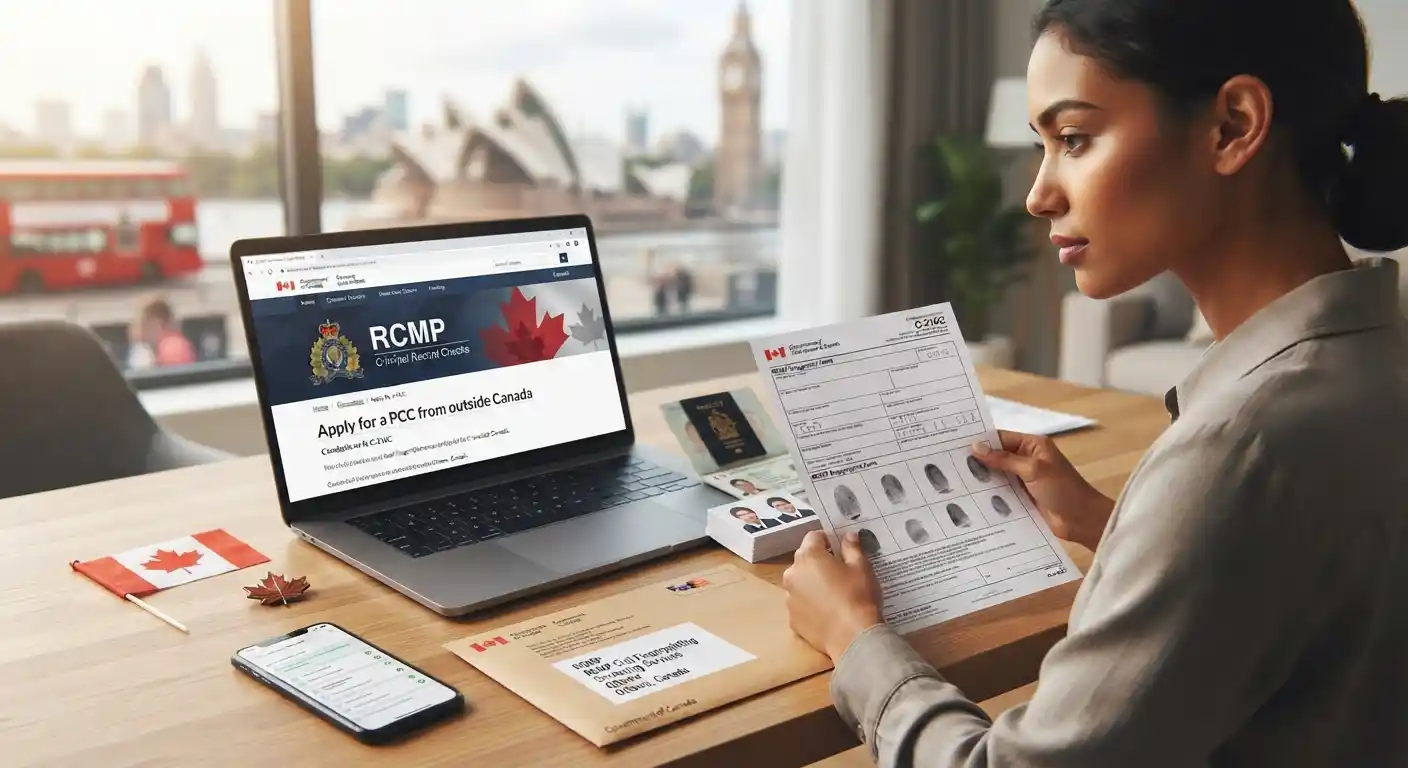
Getting RCMP fingerprinting from abroad often feels stressful when you live outside Canada. Many foreign citizens, expatriates, and former Canadian residents need an official criminal record check for immigration, foreign employment, or visa applications. Navigating this process from another country requires clear steps. If you are living overseas, you can still complete your submission smoothly through accredited channels.
Understanding the mechanics of RCMP fingerprinting from abroad ensures your documents meet strict regulatory standards without costly delays. Foreign authorities and Canadian immigration offices demand certified records. Working with a specialized agency like Four Pillars Fingerprinting simplifies the procedure and guarantees that your files reach the right destination.
The challenge of living overseas:
Moving away from Canada brings unique administrative hurdles. When a foreign employer or immigration department requests a background check, you might wonder how to fulfill Canadian requirements from thousands of miles away. Local police forces in your current country usually cannot access the Canadian Criminal Real Time Identification Services database directly.
You must follow specific protocols to convert your fingerprints into digital formats. Official guidelines require precise capture methods so the Royal Canadian Mounted Police can process your file accurately. Managing these requirements from a different time zone requires careful planning and reliable communication with Canadian service providers.
Applicants often face uncertainty regarding local police cooperation. Many overseas police stations rarely handle Canadian paperwork. This lack of familiarity can lead to incorrect card markings or improper rolling techniques. Knowing what to expect before you visit a local office saves valuable time.
Language barriers can also complicate international paperwork. Local police technicians may not understand specific Canadian coding requirements. Providing clear instruction sheets from an accredited Canadian agency helps local staff complete the card correctly. Local customs offices or embassies can sometimes assist, but preparing ahead remains vital for a seamless experience.
Traditional ink methods vs digital capture:
Physical ink cards remain the primary option when you reside outside Canadian borders. Because electronic live-scan hardware is often restricted to domestic facilities, international applicants must rely on ink-and-roll methods. The quality of these ink impressions determines whether your file gets accepted on the first try.
-
Physical ink cards: Local foreign police departments use standard ink pads on certified cards like the FD-258.
-
Digital conversion: Specialized agencies transform your physical ink cards into electronic format using high-resolution scanners.
-
Direct transmission: Converted files bypass postal wait times and transmit straight into the Canadian database.
Preparing your documents from a distance:
Preparation is critical when managing RCMP fingerprinting from abroad. Gathering your paperwork ahead of time ensures that your local appointment runs smoothly without unexpected roadblocks.
You need to secure valid identification documents that satisfy Canadian standards. Certified true copies of your passport and secondary identification must accompany your physical fingerprint cards. Many countries require a local notary or commissioner of oaths to certify these copies before mailing them internationally.
Reviewing the exact purpose of your background check is equally important. Whether you need a check for immigration, employment, or adoption, specifying the correct reason on your application forms prevents administrative rejections. Double-check all spellings and numeric codes to ensure absolute accuracy.
Step-by-step guide for non-residents:
Completing RCMP fingerprinting from abroad follows a structured sequence. Preparation keeps the process fast and prevents common errors that slow down overseas applications.
-
Visit a local official: Find a local police station, embassy, or accredited fingerprinting agency in your current country to take your fingerprints on physical ink cards.
-
Verify card quality: Ensure the technician uses clear rolling techniques so every ridge and pattern remains visible.
-
Gather identification documents: Collect certified copies of your valid passport and secondary government-issued photo identification.
-
Partner with an accredited agency: Send your completed physical cards to a trusted Canadian provider like Four Pillars Fingerprinting for professional processing.
Following each step carefully reduces the risk of rejection. International mail services should be tracked securely to ensure your physical cards arrive safely in Canada. Working with an experienced agency gives you direct tracking updates and professional guidance throughout transit.
Navigating international shipping and secure delivery:
Once your physical ink cards are ready, shipping them back to Canada safely requires reliable courier services. Regular postal mail can be slow and lacks the tracking security needed for sensitive identification documents.
Using trusted international couriers ensures that your fingerprints arrive at an accredited Canadian agency without risk of loss. Proper packaging protects the physical cards from bending, moisture, or smudging during long-distance transit.
After the Canadian agency receives your physical cards, they digitize the impressions using specialized equipment. This digital file is then submitted directly to the central database for processing.
Understanding processing times and results:
Waiting for results can cause anxiety when managing applications from afar. Processing times at the central database depend heavily on whether your record is clear.
If your fingerprints yield no criminal record, processing typically finishes within a few business days after digital submission. If a potential match or record exists, manual verification can extend the timeline.
Results are generally mailed directly to your designated address or an authorized representative. Planning your timeline weeks in advance ensures you never miss a critical immigration or employment deadline.
Why choose Four Pillars Fingerprinting?
Handling RCMP fingerprinting from abroad demands absolute accuracy and trusted expertise. Four Pillars Fingerprinting provides secure, accredited processing for international clients who cannot visit a Canadian office in person.
By combining expert intake coordination with advanced technology, the team ensures your overseas submission meets all federal criteria. Visit Four Pillars Fingerprinting today to review international submission guidelines, check service details, or coordinate your secure application from anywhere in the world.