

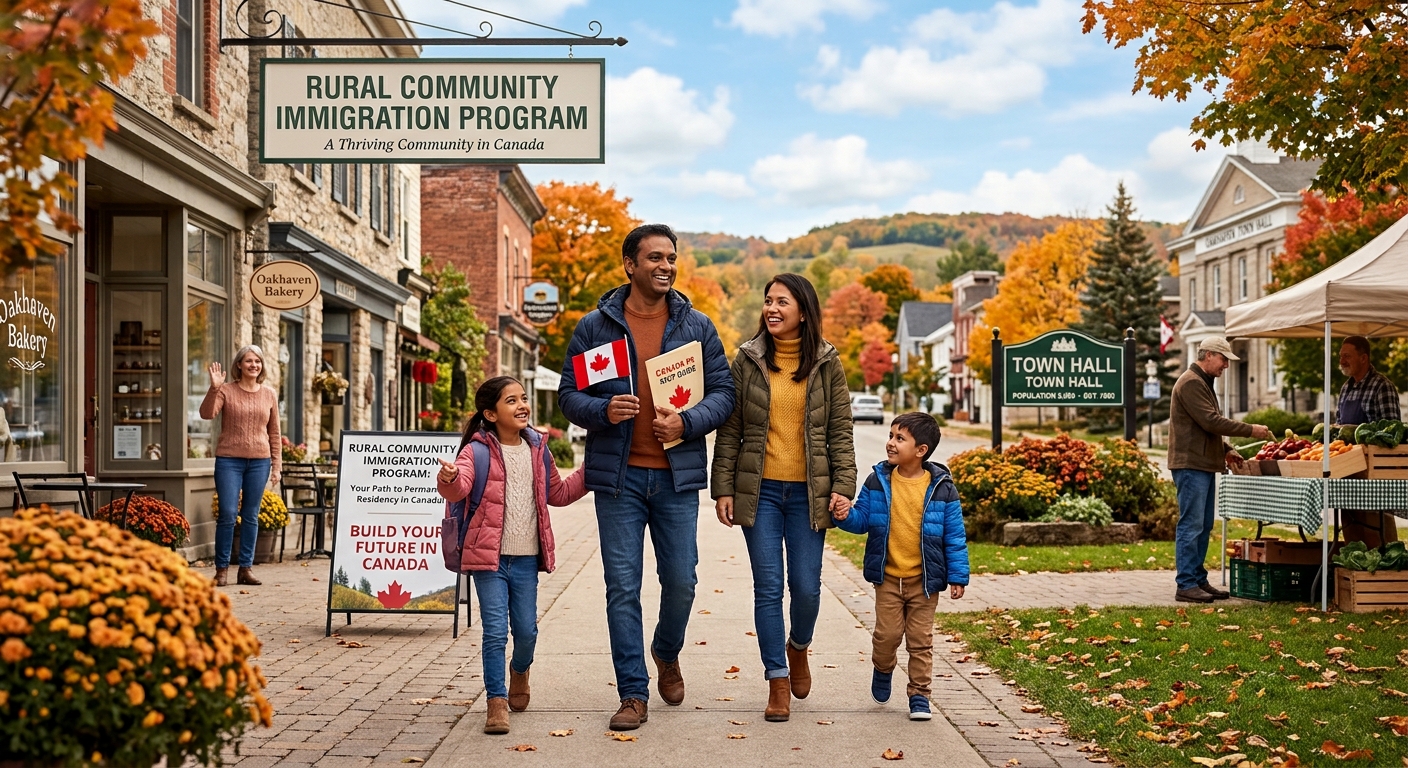
Canada’s immigration system is creating more opportunities for skilled workers who want to build their future outside major metropolitan areas. Smaller communities across the country need workers in healthcare, education, trades, manufacturing, hospitality and other important sectors. On November 9, 2026, Immigration, Refugees and Citizenship Canada (IRCC) announced an important development: the Rural Community Immigration Pilot (RCIP) is becoming a permanent program.
The new Rural Community Immigration Program will continue an employer- and community-led approach. It aims to connect skilled workers with genuine employment opportunities in smaller communities that need additional talent. This announcement is particularly relevant to people who are open to living and working outside Canada’s largest cities. It also gives employers in participating communities a longer-term immigration pathway to support their workforce needs. But how does the program work? Which communities participate? Can any rural job lead to permanent residence?
1. What is the rural community immigration program?
The Rural Community Immigration Program is a permanent economic immigration pathway designed to help smaller Canadian communities attract and retain skilled workers. It builds on the Rural Community Immigration Pilot, which began in January 2025. The pilot connected local employers with international workers in communities facing ongoing labour shortages. Following the November 2026 announcement, the federal government confirmed that the initiative would continue as a permanent program.
The program has three important objectives:
- Help rural employers address persistent labour shortages.
- Give skilled workers a pathway to Canadian permanent residence.
- Encourage newcomers to settle and build long-term connections in smaller communities.
Unlike a general job search, this pathway relies on participating communities and designated employers. Local organizations identify priority sectors and occupations based on their workforce needs. Employers must meet the community’s designation requirements before they can offer eligible jobs through the program. This approach helps connect immigration selection with actual regional employment needs.
Why does this matter?
People who are willing to settle outside Canada’s largest cities may find additional immigration options worth exploring. However, a rural job alone does not guarantee eligibility. Applicants must meet the program requirements.
2. What changed in November 2026?
The November 9 announcement confirmed that the Rural Community Immigration Pilot would transition into a permanent immigration program. This is an important change because it provides greater long-term certainty for participating communities, employers and prospective newcomers. The government also confirmed that the new program will continue the existing employer-community partnership model.
Key changes at a glance-
| Area | What the announcement means |
|---|---|
| Program status | The pilot is transitioning into a permanent program |
| Program name | Rural Community Immigration Program |
| Main objective | Attract and retain skilled workers in rural communities |
| Employer participation | Employers must receive community designation |
| Community participation | The 14 existing communities are expected to continue |
| Future expansion | Additional communities may be added |
| 2027–2029 plan | 5,500 admission spaces are targeted for the program |
The government has also explained that future expansion will depend on community participation and program requirements. One important detail is the transition date. The existing Rural Community Immigration Pilot closes on January 1, 2027. The new permanent Rural Community Immigration Program is scheduled to open on the same date. Applicants should therefore make sure they are following the correct program instructions when preparing an application.
3. Which communities are participating?
The new permanent program is expected to continue with the 14 communities that participated in the pilot. These communities are located across several provinces.
Ontario
- North Bay
- Sudbury
- Timmins
- Sault Ste. Marie
- Thunder Bay
Manitoba
- Steinbach
- Altona/Rhineland
- Brandon
Saskatchewan
- Moose Jaw
Alberta
- Claresholm
British Columbia
- West Kootenay
- North Okanagan Shuswap
- Peace Liard
Nova Scotia
- Pictou County
These communities have different industries, employers and local workforce priorities. For example, one community may need workers in healthcare, while another may focus on manufacturing, hospitality or skilled trades. Applicants should not assume that every occupation is eligible in every location. The community determines its priority sectors and occupations based on local needs.
4. Who can apply for the Rural Community Immigration Program?
The program is designed for skilled workers who want to work and settle in a participating community. IRCC’s published eligibility requirements include several important conditions. Applicants must generally:
- Obtain a valid recommendation certificate from a participating community.
- Have a valid job offer from a designated employer in that community.
- Have at least one year of related work experience, total 1,560 hours, within the previous three years.
- Demonstrate language ability through an approved language test.
- Have a Canadian educational credential or an accepted foreign equivalent.
- Show sufficient settlement funds to support themselves and eligible family members.
Meeting these basic conditions is only part of the process. The job offer, occupation, employer and community recommendation must also meet the applicable program requirements.
1. Work experience-
Applicants need qualifying work experience related to the job offer. The experience must meet the program’s requirements for duration and occupational relevance. A person’s previous job title alone does not establish eligibility. The actual duties and work experience matter.
2. Language requirements-
Applicants must demonstrate their language ability through an approved test. The required language level depends on the occupation’s TEER category. Applicants should check the official requirements before booking a language test.
3. Education requirements-
A Canadian educational credential or an accepted foreign equivalent is required. Applicants with education completed outside Canada may need an Educational Credential Assessment (ECA), depending on the applicable instructions.
4. Settlement funds-
Applicants may need to demonstrate that they have enough money to support themselves and their family after arriving in the community. The amount depends on family size and the current IRCC requirements. Always check the latest official eligibility page before applying. Requirements and instructions can change as the permanent program begins.
5. Why is a designated employer important?
A designated employer is one of the most important parts of this immigration pathway. Not every business in a participating community can offer a job through the program. Employers must first receive designation from the relevant community. The community reviews employers based on their labour needs, business standing and ability to support newcomer employees. Only designated employers in approved priority sectors can participate.
What does this mean for applicants?
Before accepting a job offer, applicants should confirm:
- Is the employer officially designated?
- Is the position within a priority sector or occupation?
- Does the job offer meet the program requirements?
- Can the employer support the community recommendation process?
- Does the applicant meet the work experience and language requirements?
A job offer from a business located in a participating community is not automatically eligible. The employer must be designated, and the position must meet the relevant criteria. This is why checking the employer’s status is an important early step.
6. How does the community recommendation work?
The community recommendation is another important stage of the process. The applicant first needs a qualifying job offer from a designated employer. The employer then submits the community recommendation application directly to the participating community for review. The community checks whether:
- The job is within an approved priority sector or occupation.
- The job offer is genuine.
- The applicant meets the applicable program requirements.
If the community approves the recommendation, it issues a recommendation certificate. The applicant can then use the certificate to apply for permanent residence through IRCC. A community recommendation is not the same as permanent residence approval. IRCC still reviews the permanent residence application and makes the final decision. Applicants should also pay attention to the validity of their recommendation certificate and follow the applicable application instructions.
7. What types of jobs may be available?
The program focuses on local labour market needs. Participating communities identify priority sectors and occupations based on vacancies that cannot be filled locally. The government has reported that newcomers under the pilot helped address shortages in sectors such as:
- Healthcare
- Education
- Sales and services
Other local priorities may include skilled trades, manufacturing, transportation, hospitality and related industries, depending on the community. However, these examples do not mean every occupation in these sectors qualifies. Each community publishes its own priority occupations and designated employers.
A practical example-
Consider a hypothetical applicant with experience in manufacturing. The applicant finds a manufacturing employer in a participating community. Before relying on the job offer for immigration purposes, the applicant must confirm that:
- The employer is designated.
- The position is listed within the community’s priority occupations.
- The job offer meets the program rules.
- The applicant’s work experience meets the relevant requirements.
- The applicant meets the language, education and settlement fund requirements.
If all applicable conditions are met, the applicant may be able to pursue a community recommendation. This example is illustrative only. Actual eligibility depends on the official program criteria and individual circumstances.
8. What happens to the existing Rural Community Immigration Pilot?
The transition from pilot to permanent program is an important detail for people who are already preparing applications. IRCC has confirmed that the existing Rural Community Immigration Pilot will close on January 1, 2027. The new Rural Community Immigration Program is scheduled to open on that date. IRCC will continue processing applications it has already received under the pilot.
Applicants who already have a community recommendation dated December 31, 2026, or earlier must submit their permanent residence application before that recommendation expires. Those who do not have a recommendation under the pilot should review the new permanent program’s instructions. This distinction matters because applicants should not assume that old pilot instructions automatically apply to the new program in every situation.
What should existing applicants do?
- Check whether they already have a valid community recommendation.
- Review the recommendation’s expiry date.
- Confirm the permanent residence submission deadline.
- Follow the correct online application instructions.
- Keep copies of all supporting documents.
- Monitor official IRCC updates during the transition.
People who have already submitted a pilot application should continue following their application instructions.
9. Is the Rural Community Immigration Program a good option for You?
This pathway may be worth exploring if you have relevant work experience and are genuinely willing to settle in a smaller Canadian community. However, it is not suitable for everyone. Before choosing this route, consider the following factors.
1. Your occupation-
Does your occupation match a priority sector or occupation in a participating community?
2. Your employment prospects-
Are you able to obtain a genuine job offer from a designated employer?
3. Your settlement plans-
Are you prepared to live and work in the selected community for the long term?
4. Your language ability-
Can you meet the required language level for your occupation?
5. Your qualifications-
Does your education and work experience meet the program criteria?
6. Your family situation-
Have you considered housing, schools, healthcare, employment opportunities for accompanying family members and other settlement needs? Permanent residence planning should consider more than eligibility alone. Choosing a community where you can build a stable life is equally important.
10. How Four Pillars Immigration can help:
Exploring a new immigration pathway can raise several questions. You may wonder whether your work experience qualifies, whether a particular job offer meets the requirements or whether a participating community is suitable for your plans. At Four Pillars Immigration, we help clients understand Canadian immigration pathways and prepare applications based on their individual circumstances.
If you are considering the Rural Community Immigration Program, understanding the requirements before accepting an employment opportunity can help you make a more informed decision. Our approach focuses on clear communication, careful document preparation and realistic guidance.