

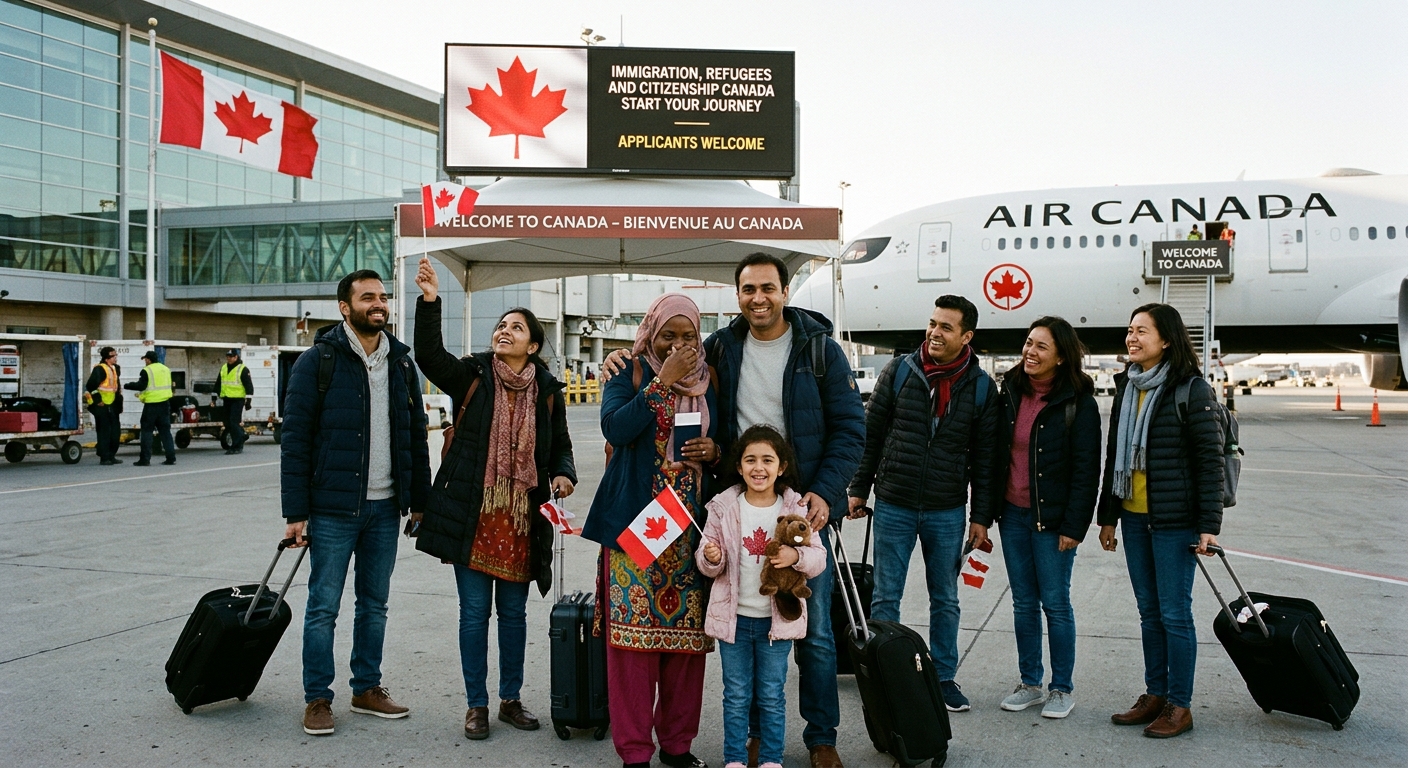
Canada’s immigration system is entering another important period of change. The federal government has announced its Canada immigration plan 2027–2029, setting new targets for permanent residents and temporary residents while introducing additional measures for people already living in the country. For newcomers, international graduates, temporary foreign workers and families, these changes deserve attention. They may influence future immigration opportunities, application planning and the way Canada selects permanent residents.
One of the most significant announcements is a time-limited measure intended to help up to 200,000 people already in Canada transition to permanent residence through separate worker and humanitarian groups. However, this announcement does not mean that every temporary resident will automatically qualify for permanent residence. The government has identified particular groups and existing application pathways. Applicants must understand the scope of the measure before making decisions about their immigration plans.
1. What is Canada’s 2027–2029 immigration plan?
Every year, the federal government publishes an Immigration Levels Plan. It establishes the number of permanent residents Canada intends to admit and sets targets for new temporary resident arrivals. The 2027–2029 plan aims to create a more predictable immigration system while supporting Canada’s economic and regional needs. According to Immigration, Refugees and Citizenship Canada (IRCC), the government plans to maintain the following annual targets:
| Immigration category | Annual target |
|---|---|
| Permanent resident admissions | 380,000 |
| New temporary resident arrivals | 370,000 |
| New temporary worker arrivals | 220,000 |
| New international student arrivals | Up to 150,000 |
These figures apply to each of the three years covered by the plan. The government also intends to maintain economic immigration at more than 64% of total permanent resident admissions. This indicates that Canada continues to place significant importance on skilled workers, economic contributions and labour market needs.
What does this mean for applicants?
Canada is not ending immigration. Instead, the government is focusing on managing the number of newcomers while selecting applicants who can support economic growth, regional development and community needs.
2. New PR measure: Up to 200,000 people already in Canada
One of the most discussed parts of the November 2026 announcement is a temporary measure supporting up to 200,000 people already living in Canada. The government plans to use two separate groups:
- Workers cohort: Up to 100,000 people.
- Humanitarian cohort: Up to 100,000 people.
The measure is intended to provide additional permanent residence admissions space in 2027. It also aims to recognize people who have already established themselves in Canadian communities and help address existing application inventories.
A. Workers cohort: Up to 100,000 people:
The workers cohort is intended to help people already contributing to Canada’s economy transition to permanent residence. The federal government will work with provinces and territories to identify workers who meet regional labour market needs. The announcement identifies several ways this measure may operate.
Provincial Nominee Program support-
Provinces and territories will receive additional nomination spaces through increased Provincial Nominee Program allocations. They may use these spaces to nominate workers who meet their regional economic needs.
Certain existing federal applications-
Provinces and territories may also identify workers who have already submitted applications under selected federal immigration programs. The government specifically identifies applications under the Atlantic Immigration Program and certain programs that are closed to new applications.
These include:
- Start-Up Visa Program.
- Self-Employed Persons Program.
- Agri-Food Pilot.
- Home care worker programs.
The announcement does not establish a general application route for every temporary worker. It focuses on particular groups and existing applications.
B. Humanitarian cohort: Up to 100,000 people:
The humanitarian cohort is intended to support people already in Canada who have been waiting for decisions or who fall within specified humanitarian commitments. The government identifies several groups and application inventories.
These include:
- Remaining applications under Hong Kong permanent residence pathways.
- Applications under the Ukraine Family Reunification Pathway.
- Individuals already found eligible for permanent residence on humanitarian and compassionate grounds.
- Certain spouses, common-law partners and dependent children of Canadian citizens and permanent residents.
The government also aims to bring spousal and common-law partner processing times closer to 12 months for applicants destined for provinces and territories outside Quebec. This is an objective, not a guaranteed processing time for every applicant. The humanitarian cohort is not an open application program for all people experiencing difficult circumstances in Canada. The announcement identifies specific groups and existing commitments.
3. Will every temporary resident get Permanent Residence?
No. This is one of the most important points to understand. The announcement may create opportunities for certain people already living in Canada. However, it does not give automatic permanent residence to everyone holding a work permit, study permit or visitor record. Eligibility will depend on the specific measure, application category and government instructions.
For example:
- A temporary foreign worker should not assume that employment alone qualifies them for the new measure.
- An international student should not assume that graduation automatically creates eligibility.
- A visitor should not assume that living in Canada creates a direct permanent residence pathway.
- Someone with an existing immigration application should confirm whether their application falls within an identified group.
Applicants should avoid relying on social media claims that suggest a new pathway is open to everyone. The federal announcement provides an overview of the measure, but applicants should wait for detailed eligibility instructions before making decisions based on it.
4. What are the changes to Canada’s Permanent Residence priorities?
The new levels plan also shows where Canada intends to direct its immigration spaces. Economic immigration will continue to receive the largest share of permanent resident admissions. The government plans to work more closely with provinces, territories and employers to identify labour shortages and attract people with relevant skills. This approach may influence several immigration programs.
Express Entry-
Express Entry remains an important system for managing applications under federal economic immigration programs. Canada continues to use category-based selection to identify candidates with skills and experience in areas of labour market need. Candidates should review their profiles carefully and make sure their education, language results and work experience are accurately reported. The separate Express Entry CRS changes introduced on November 3, 2026, should also be considered when reviewing a profile.
Provincial Nominee Program-
The government has announced increased planned admissions under the Provincial Nominee Program. This reflects the importance of provincial labour market needs. Each province and territory has its own nomination streams, eligibility requirements and selection priorities. A candidate who does not qualify for one province’s program may have different options elsewhere. However, applicants must meet the requirements of the specific stream.
Atlantic Immigration Program-
The Atlantic Immigration Program is another regional pathway that connects eligible workers and international graduates with designated employers in Atlantic Canada. The new immigration plan identifies increased planned admissions for this program. Applicants interested in this pathway should understand its employer, work experience, language and education requirements.
Rural immigration-
Canada is also strengthening immigration opportunities in smaller communities. The government has announced that the Rural Community Immigration Pilot will become permanent. This development supports the government’s broader objective of connecting skilled workers with employers and communities experiencing labour shortages. The permanent program is scheduled to open on January 1, 2027. Applicants should review the official program requirements before making plans.
5. Why is Canada focusing on people already living in the country?
Canada’s new immigration direction recognizes that many temporary residents already contribute to the economy and communities. Some have Canadian work experience. Others have studied at Canadian institutions, established families or developed professional skills. The government has identified several reasons for supporting people already in Canada:
Supporting regional labour markets-
Employers in different parts of Canada face different workforce challenges. Provincial and territorial involvement can help direct immigration spaces toward local needs.
Reducing application inventories-
The temporary measure is intended to help process certain existing applications and address outstanding commitments.
Keeping families together-
The humanitarian cohort includes family-related applications and commitments.
Retaining workers-
People who have already gained Canadian experience may contribute to long-term economic needs. These objectives show that Canada’s immigration policy is becoming more targeted. Applicants should therefore focus on the requirements of specific programs instead of assuming that one pathway will suit everyone.
6. What should temporary residents do now?
If you are already living in Canada, the latest announcement is a good reason to review your immigration situation. However, avoid making major decisions based only on the headline of a new policy announcement. Consider these practical steps.
Review your current immigration status-
Check the expiry date and conditions of your current permit or immigration document. Do not assume that a proposed permanent residence measure extends your temporary status.
Review your existing applications-
If you have already applied for permanent residence, keep copies of your application documents and correspondence. Check whether the program you applied under is mentioned in the government’s announcement.
Update your Express Entry profile where necessary-
If you are eligible for Express Entry, review your profile for accuracy. Check your language test results, education details, employment history and other relevant information.
Review provincial immigration programs-
Provincial programs may offer different opportunities depending on your occupation, work experience, education and connection to a province. Check official provincial websites for current requirements.
Keep your documents organized-
Having accurate documents ready can make it easier to respond when a program opens or an authority requests further information. Prepare important records, including:
- Passport and identity documents.
- Work permits and study permits.
- Employment letters.
- Educational credentials.
- Language test results.
- Proof of work experience.
- Previous immigration applications and correspondence.
7. Does the new plan change study and work permit opportunities?
The new plan also sets targets for temporary resident arrivals. Canada intends to stabilize new temporary resident arrivals at 370,000 annually during 2027, 2028 and 2029. This includes up to 150,000 new international student arrivals and 220,000 new worker arrivals each year. These targets do not mean that every applicant will receive a study or work permit. IRCC continues to assess applications under the applicable eligibility requirements.
For international students-
Students should carefully research their intended institution, program and study permit requirements. They should also review current rules concerning financial support, study permit eligibility and post-graduation work permit eligibility. Do not choose a program based only on the assumption that it will automatically lead to permanent residence.
For foreign workers-
Workers should understand the conditions of their work permits and whether their employment situation meets the requirements of a particular immigration program. A Canadian job alone does not guarantee permanent residence. Applicants should assess the relevant federal or provincial pathway before making employment or immigration decisions.
8. How Four Pillars Immigration can help:
Immigration announcements can create excitement, but they can also create confusion. A new government measure does not always mean that applications are immediately open. Eligibility requirements, program instructions and application procedures matter. At Four Pillars Immigration, we believe that informed planning is an important part of the immigration journey. Our team helps clients understand Canadian immigration pathways and organize their applications according to the applicable requirements.
Every applicant has a different background. Education, employment history, language ability, family circumstances and immigration status can all influence which pathway may be appropriate. Rather than relying on general online advice, applicants should review their own circumstances and the official program requirements.
Our approach is simple: clear information, careful preparation and professional support throughout the application process.
We encourage clients to understand their options before making important immigration decisions. We also avoid promising approvals or guaranteed outcomes because immigration decisions remain with the responsible government authorities.
9. Frequently Asked Questions
1. What is Canada’s 2027–2029 Immigration Levels Plan?
It is Canada’s federal immigration plan for 2027, 2028 and 2029. It sets annual targets of 380,000 permanent resident admissions and 370,000 new temporary resident arrivals.
2. Is Canada introducing a new PR pathway for 200,000 people?
The government announced a time-limited measure intended to support up to 200,000 people already living in Canada through worker and humanitarian cohorts. It is not a general open pathway for all temporary residents.
3. Who may benefit from the workers cohort?
The government plans to work with provinces and territories to transition up to 100,000 workers and their families. This includes workers who meet regional labour market needs and certain people with existing applications under selected federal programs.
4. Who may benefit from the humanitarian cohort?
The government identifies certain existing humanitarian and family-related application groups, including remaining Hong Kong and Ukraine pathway applications and people already found eligible for permanent residence on humanitarian and compassionate grounds.
5. Can international students apply under the new 200,000-person measure?
The announcement does not create a general eligibility route for all international students. Students should wait for detailed instructions and review existing immigration programs for which they may qualify.
6. Will Canada admit 380,000 permanent residents every year?
The plan sets a target of 380,000 permanent resident admissions annually for 2027, 2028 and 2029. These are planning targets, not individual guarantees.
7. Will Provincial Nominee Program opportunities increase?
The government has announced increased planned admissions under the Provincial Nominee Program. Actual nomination opportunities and eligibility requirements depend on the province or territory.
8. Is the Rural Community Immigration Pilot becoming permanent?
Yes. The government announced that the Rural Community Immigration Pilot will become permanent, with the permanent program scheduled to open on January 1, 2027.
9. Does the new plan extend my work permit or study permit?
No. The Immigration Levels Plan does not automatically extend an individual’s temporary status. You must continue to follow the conditions and expiry dates of your existing immigration documents.
10. Should I change my immigration strategy because of this announcement?
Not without reviewing your individual circumstances. Consider your current status, work experience, education, language ability and eligibility under existing programs. Wait for detailed instructions before relying on the new temporary measure.