

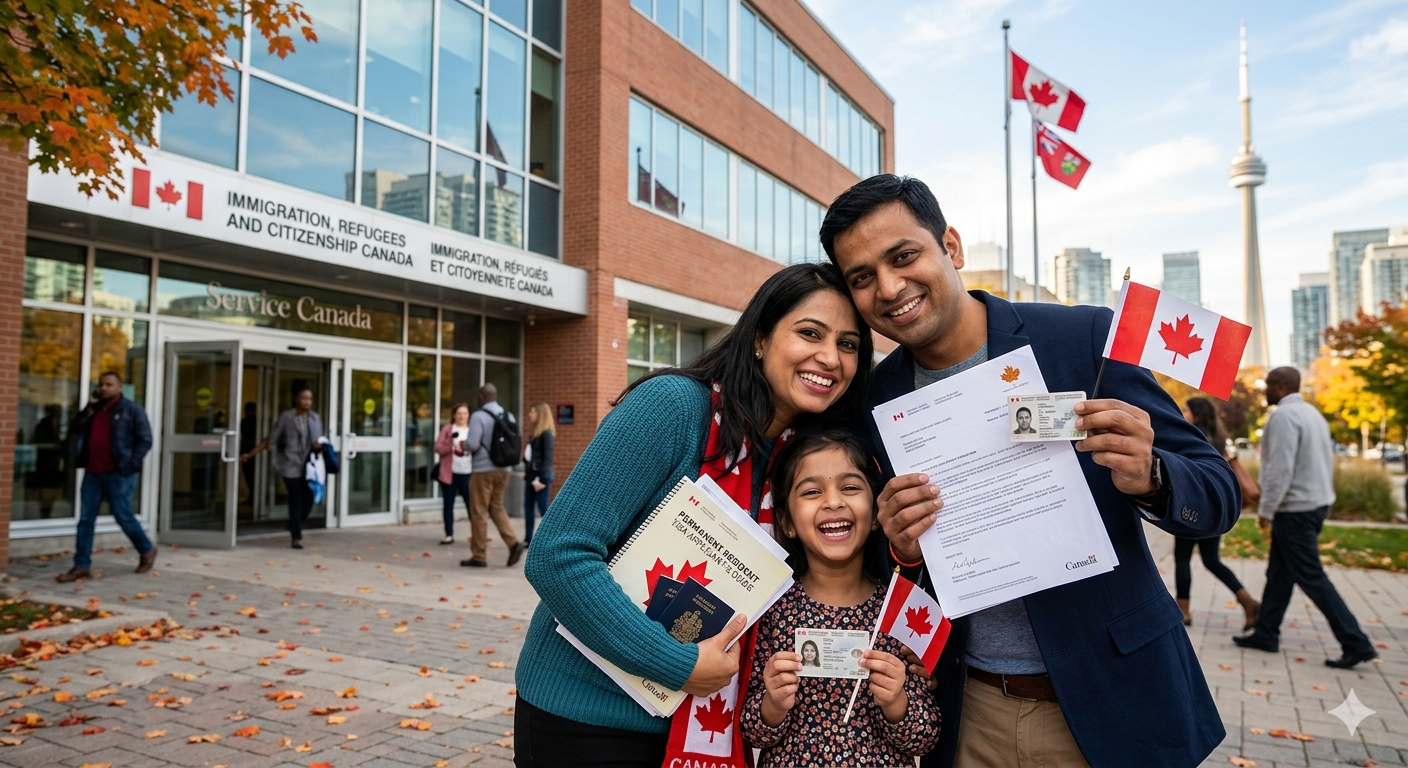
The landscape of Canadian Permanent Residency is undergoing a significant transformation. As the federal government executes the 2026–2028 Immigration Levels Plan, the focus has shifted toward a more surgical approach to recruitment. For those looking to apply for Canada permanent residency, the environment in 2026 demands a deeper understanding of regional labor needs and category-specific selection.
What is Canada Permanent Residency?
Canada grants permanent residency (PR) status to non-Canadian citizens, allowing them to live and work anywhere within the country without the restrictions of a temporary visa. While permanent residents are not citizens, they enjoy a wide array of rights and benefits that make Canada one of the most attractive destinations globally.
Key Benefits of PR Status:
- The Right to Work and Study: Permanent residency status allows you to work for any employer in any province, whereas work permits often tie holders to a single employer.
- Social and Healthcare Benefits: Access to the universal healthcare system and social services, including the Canada Pension Plan and unemployment insurance.
- Legal Protection: Coverage under the Canadian Charter of Rights and Freedoms.
- Pathway to Citizenship: Once you have lived in Canada for three out of the five years (1,095 days) prior to your application, you may be eligible to become a Canadian citizen.
Maintaining Your Status:
You cannot simply “set and forget” your permanent residency status. To maintain your status, you must meet residency obligations. Specifically, you must be physically present in Canada for at least 730 days within any five-year period. Failure to meet this requirement can lead to the loss of your PR status.
Canada Permanent Residency Eligibility in 2026
Determining your Canada permanent residency eligibility is the most critical step in your journey. In 2026, the government has placed a heavy emphasis on “Category-Based Selection,” which looks beyond just high scores and focuses on what the Canadian economy needs today.
1. The Human Capital Factors:
The Express Entry system uses the Comprehensive Ranking System (CRS) to rank candidates. Your eligibility is largely determined by:
- Age: Candidates between 20 and 29 receive the highest points.
- Education: Higher levels of education (Masters or Ph.D.) significantly boost your score, especially if you earned one of the degrees in Canada.
- Language Skills: Proficiency in English or French is mandatory. In 2026, the Canadian government prioritizes French-language speakers through dedicated draws.
2. High-Demand Categories for 2026:
If your work experience falls under the following categories, your Canada permanent residency eligibility increases significantly, even if your overall CRS score is lower than the general average:
- Healthcare Professionals: Doctors, nurses, and lab technicians.
- STEM Occupations: Software engineers, data scientists, and architects.
- Trades: Carpentry, plumbing, and electrical work.
- Transport and Agriculture: Essential for maintaining Canada’s supply chains.
Core Canada Permanent Residency Requirements
Before you apply for Canada permanent residency, you must ensure you have the necessary documentation. IRCC (Immigration, Refugees and Citizenship Canada) is known for its strict adherence to document standards.
Mandatory Documentation Checklist:
| Document | Purpose | Validity Notes |
| Language Test Results | Proof of English/French ability | Must be less than 2 years old at time of application. |
| ECA Report | Equivalency of foreign education | Required for all non-Canadian degrees; valid for 5 years. |
| Police Certificates | Proof of good character | Required from every country lived in for 6+ months since age 18. |
| Proof of Funds | Financial stability | Updated annually; ~$15,000 for a single person in 2026. |
| Medical Exams | Health admissibility | Must be performed by an IRCC-approved panel physician. |
The Proof of Funds Requirement:
One of the most common reasons for rejection is insufficient proof of funds. You must demonstrate that you have enough money to support yourself and your family as you settle. However, this requirement is waived if you are currently authorized to work in Canada and have a valid job offer, or if you are applying under the Canadian Experience Class (CEC).
The Canada Permanent Residency Process
The Express Entry portal primarily manages the Canada permanent residency process. It is a competitive, points-based system that operates in several distinct phases.
Phase 1: Preparation and Credentialing:
Before creating a profile, you must complete your language testing (IELTS, CELPIP, or PTE Core) and obtain your Educational Credential Assessment (ECA). Without these, you cannot enter the pool.
Phase 2: Entering the Express Entry Pool:
You submit a digital profile containing your personal details, work history, and education. Once submitted, you are assigned a CRS score. Your profile remains active in the pool for 12 months.
Phase 3: The Provincial Nominee Program (PNP) Strategy:
Many provinces have their own “streams” to nominate candidates from the Express Entry pool. A provincial nomination is the “golden ticket” of the Canada permanent residency process, as it adds 600 points to your CRS score, virtually guaranteeing an Invitation to Apply (ITA) in the next draw.
Phase 4: Receiving the Invitation to Apply (ITA):
If your score meets the cut-off for a specific draw, IRCC will issue an ITA. In 2026, draws are more frequent but highly targeted toward specific occupations.
Phase 5: Submission and Biometrics:
After receiving an ITA, you have 60 days to submit your full application. This includes uploading all digital copies of your documents and paying the Right of Permanent Residence Fee (RPRF). You will also be required to provide biometrics (fingerprints and photo) at a designated service point.
How to Apply for Canada Permanent Residency
While Express Entry is the most famous route, there are several other ways to apply for Canada permanent residency depending on your unique situation.
1. Family Sponsorship:
If you have a spouse, partner, or parent who is a Canadian citizen or permanent resident, they may be able to sponsor you. This pathway does not use a points system and focuses on the genuineness of the relationship.
2. Atlantic Immigration Program (AIP):
For those willing to live in the Atlantic provinces (New Brunswick, Nova Scotia, Prince Edward Island, or Newfoundland and Labrador), the AIP offers a pathway for skilled workers and international graduates with a job offer from a designated employer.
3. Rural and Northern Immigration Pilot (RNIP):
This community-driven program is designed to spread the benefits of economic immigration to smaller communities. It requires a recommendation from the community and a valid job offer.
4. Quebec-Selected Skilled Workers:
Quebec has its own immigration system. If you intend to live in Montreal or elsewhere in Quebec, you must first apply for a Certificat de sélection du Québec (CSQ) before applying to the federal government for PR.
Common Pitfalls and Success Strategies
Navigating the Canada permanent residency process is complex, and small errors can lead to years of delay.
Avoiding Rejection:
- The “Gap” in Work History: Ensure your reference letters precisely match the duties listed in the National Occupational Classification (NOC) system. If your job title says “Manager” but your duties are “Clerical,” IRCC may reject the experience.
- Incomplete Police Clearances: Ensure the certificates cover the exact dates you resided in a country. If there is a one-week gap between certificates, the application could be deemed incomplete.
- Outdated Information: If you get married or have a child while your application is in progress, you must notify IRCC immediately to add them to your file.
Strategies for Success:
- Boost Your Language Score: Moving from a CLB 8 to a CLB 9 in English can sometimes add over 30 points to your CRS score due to “skills transferability” combinations.
- Learn French: Even basic proficiency in French can open doors to specific Francophone draws that have significantly lower CRS requirements.
- Stay Informed: Immigration policy in 2026 is dynamic. Monitor the official IRCC website for updates on “targeted draws” to see if your profession has suddenly become a priority.
The dream of obtaining Canada permanent residency is achievable, but it requires meticulous planning and a proactive approach. By understanding the Canada permanent residency requirements and staying updated on the evolving eligibility rules, you can position yourself at the front of the queue.
Whether you are applying from overseas or transitioning from a work permit within the country, 2026 is a year of opportunity—provided you have the right strategy and a complete, accurate application.